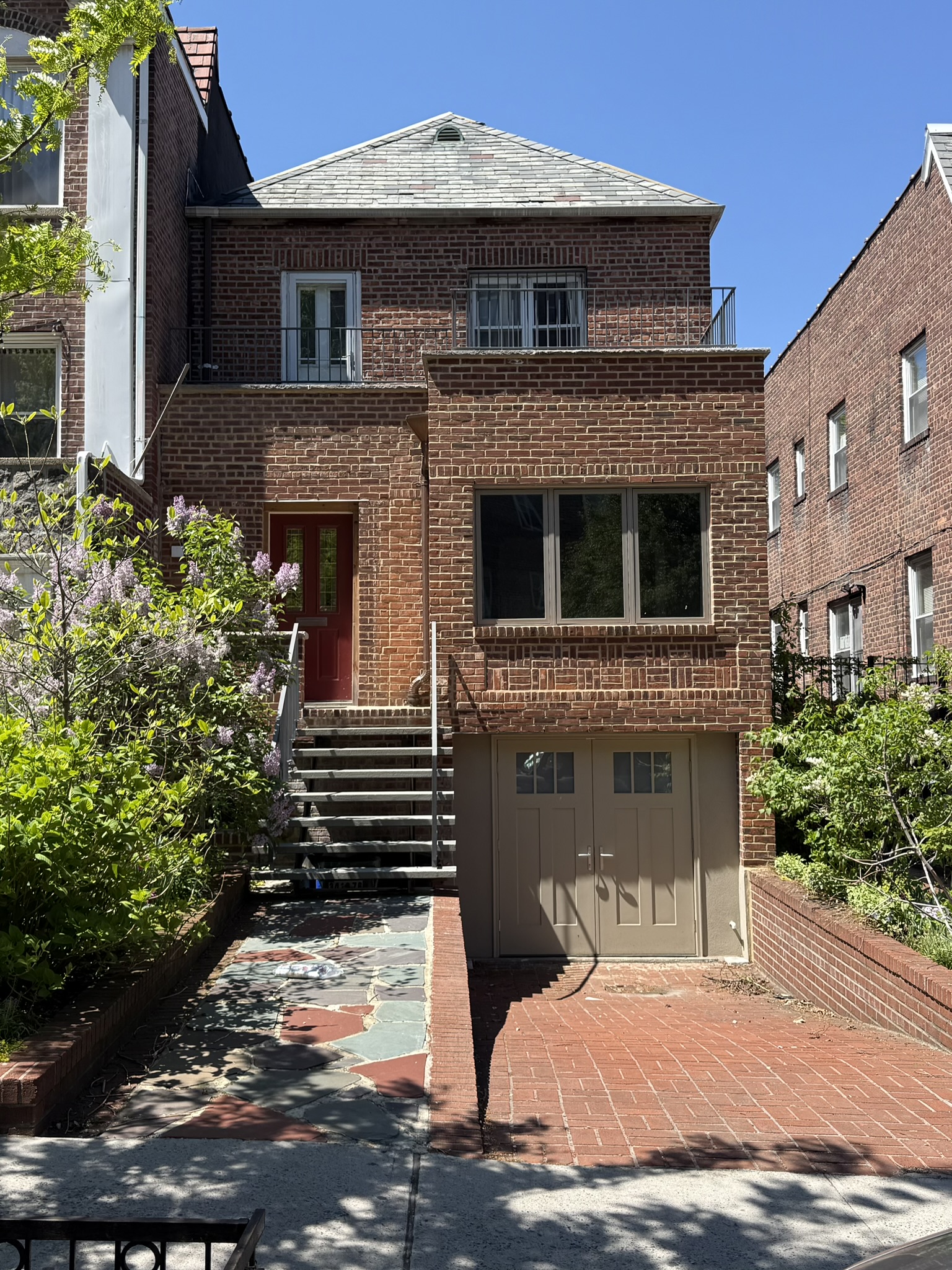
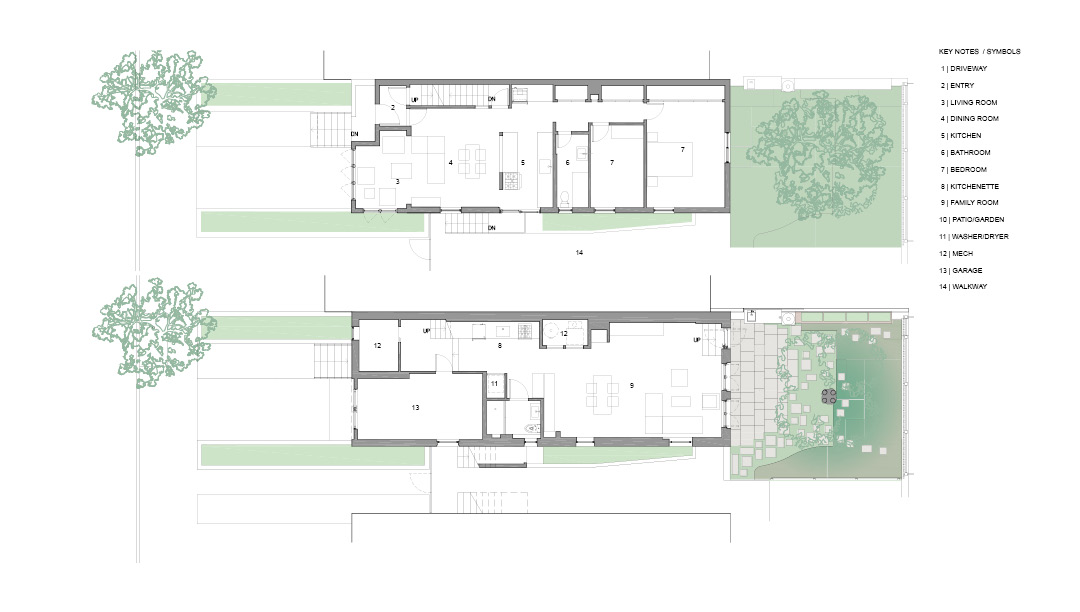
In recent years, spending more time outdoors has become increasingly important as people seek relief from the confinement of interior spaces. We believe that regular interaction with Green Spaces reduces stress, improves mood, and sharpens attention. Located in Jackson Heights, Queens, the house sits adjacent to the historic district's tree-lined streets and just steps from the recently renovated Travers Park. It is also near Paseo Park, the mile long linear park that emerged from New York City's Open Streets initiative.
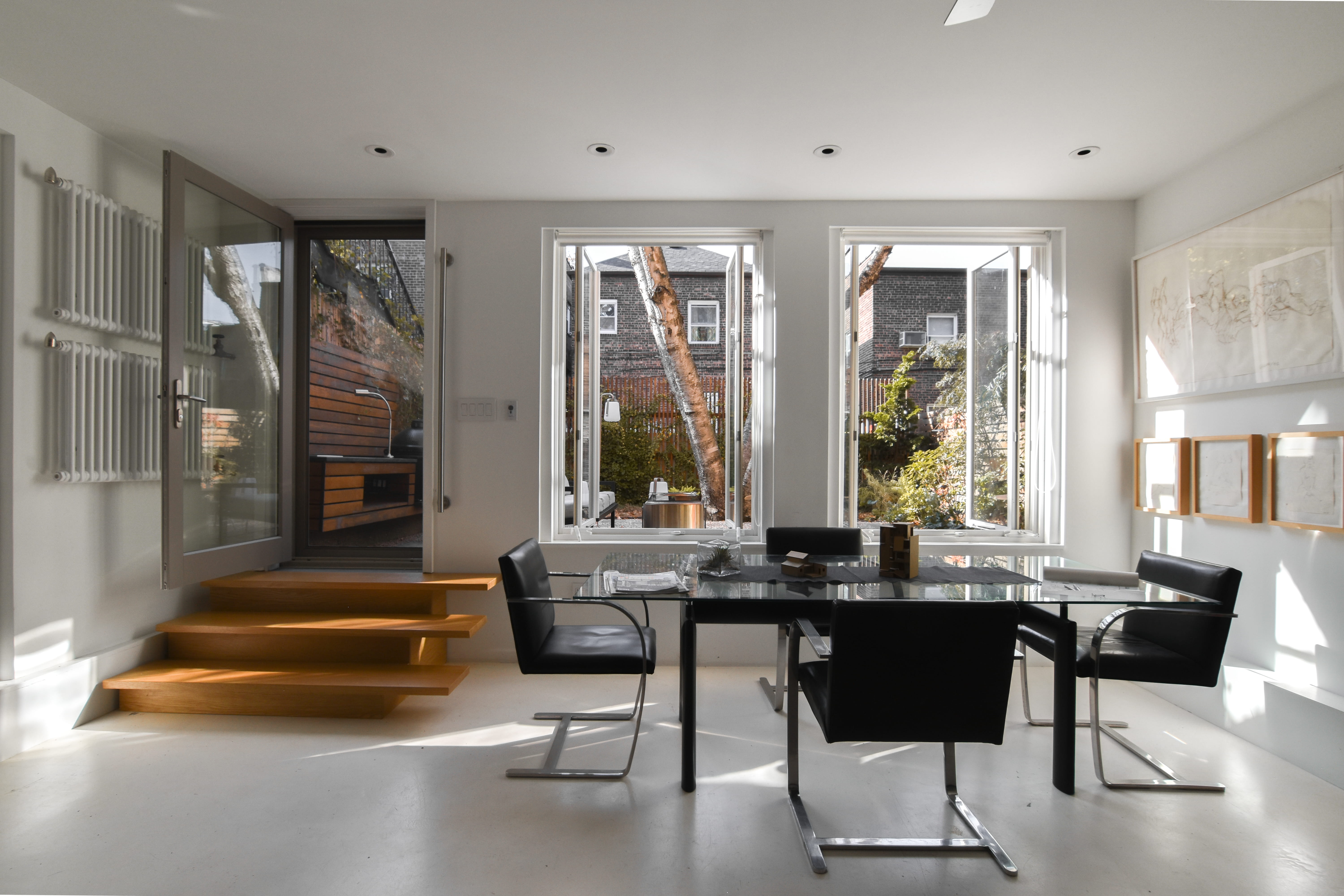
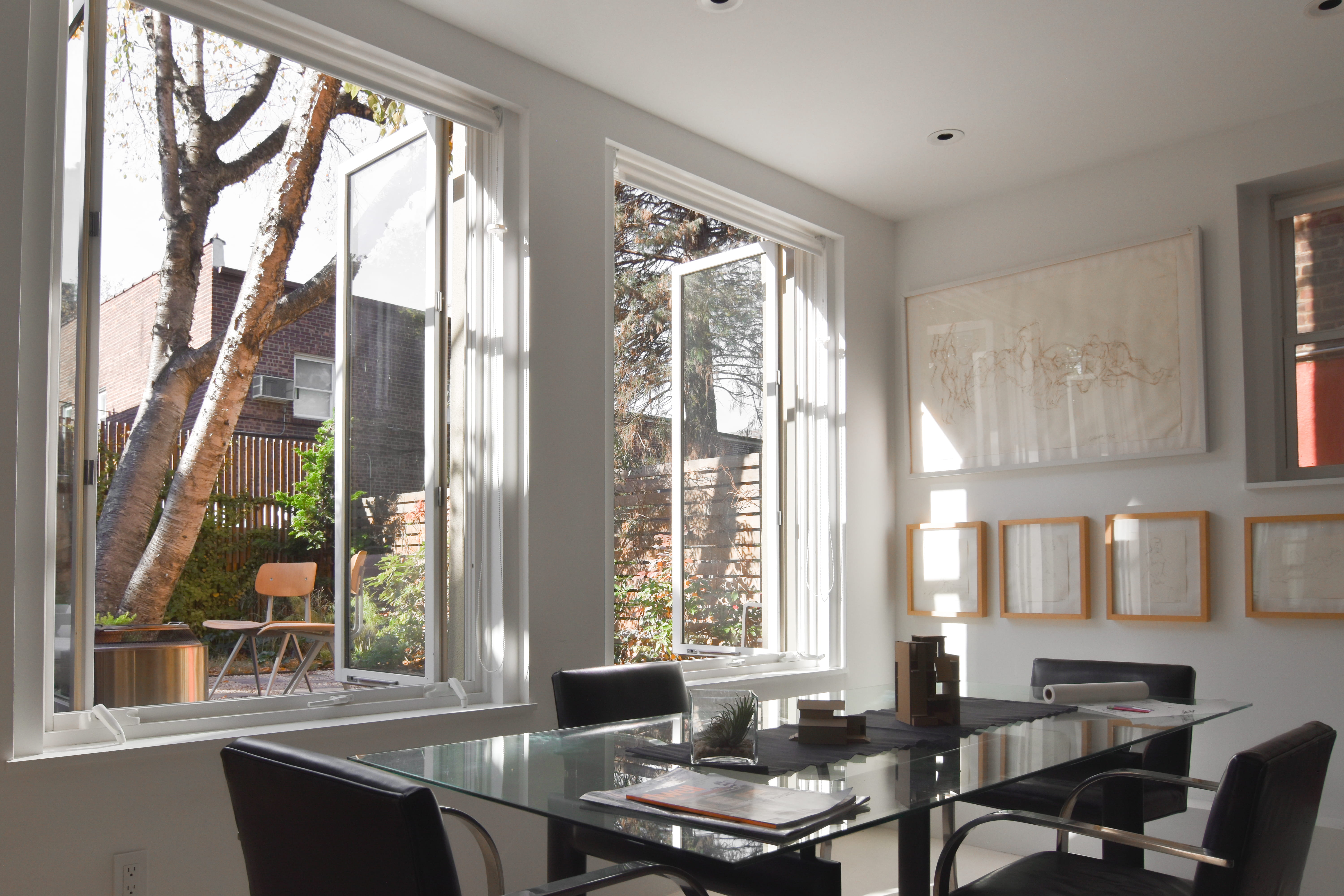
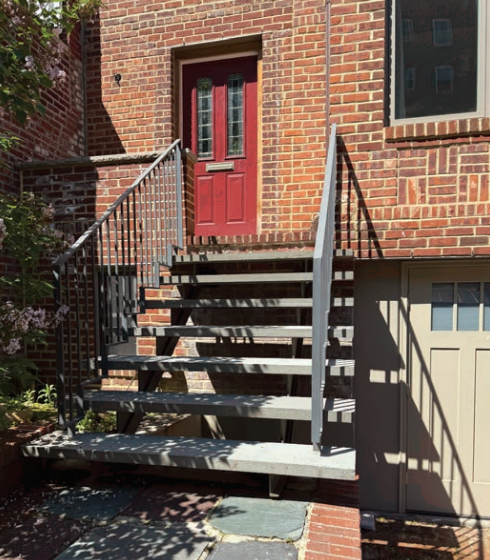
The existing semi-detached two-family house benefits from side access leading directly to the rear yard. To strengthen the relationship between the front and rear outdoor spaces, we designed a new planted side garden, which creates a seamless, continuous landscape experience. The project consists of two interconnected components: the design of a new rear garden, establishing the view and outdoor experience first, and then developed the facade interventions to deepen the relationship between the interior spaces and the landscape beyond.
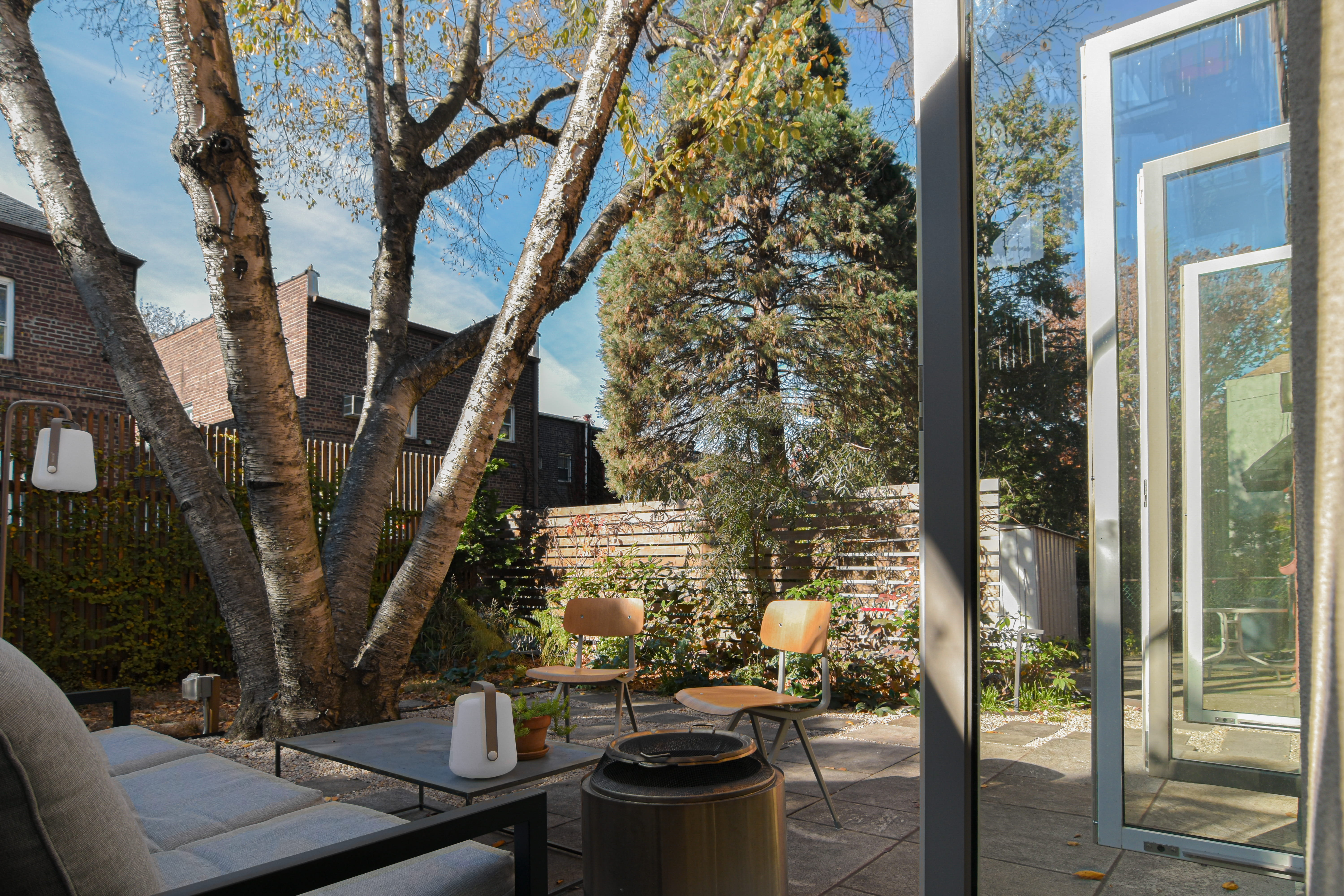
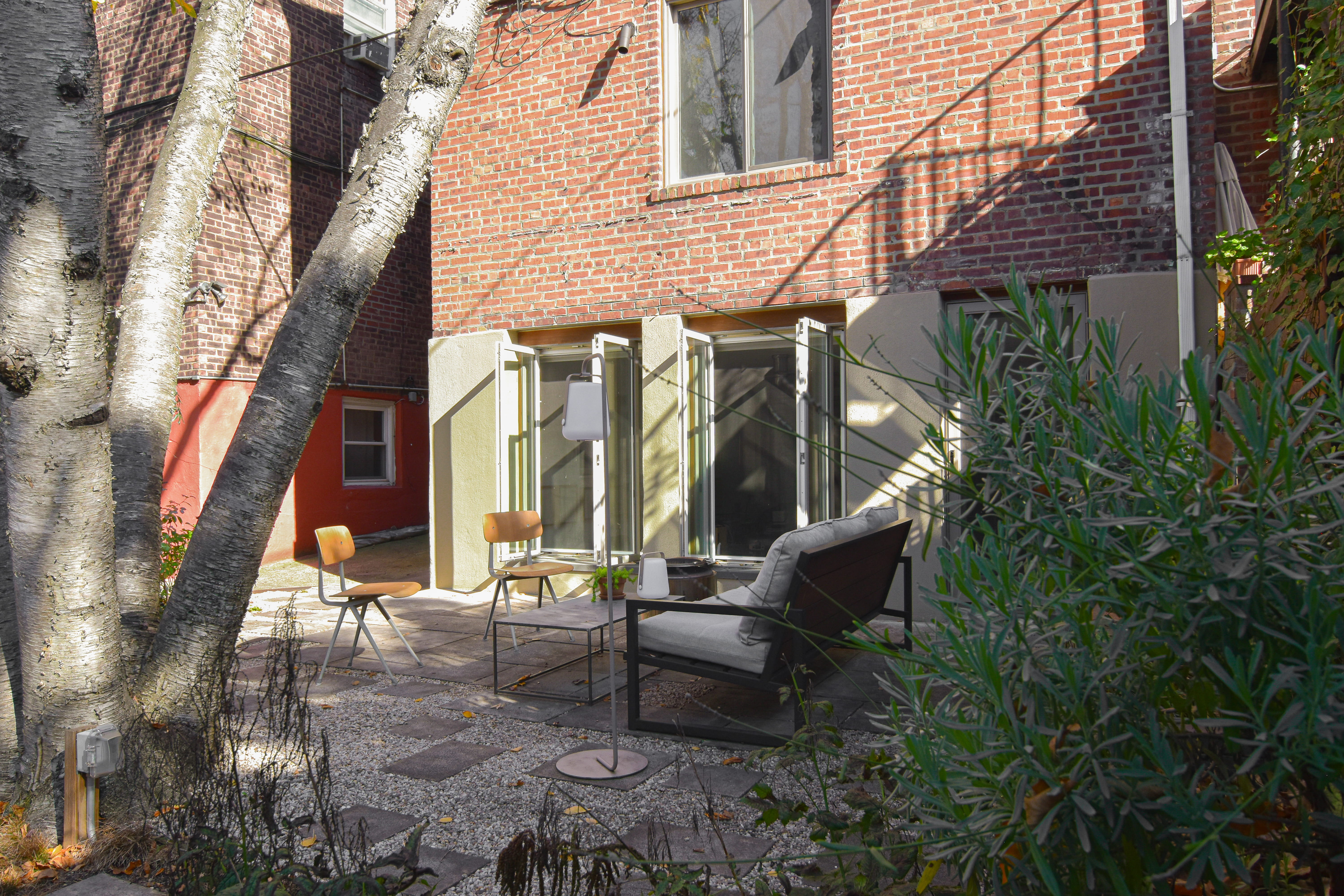
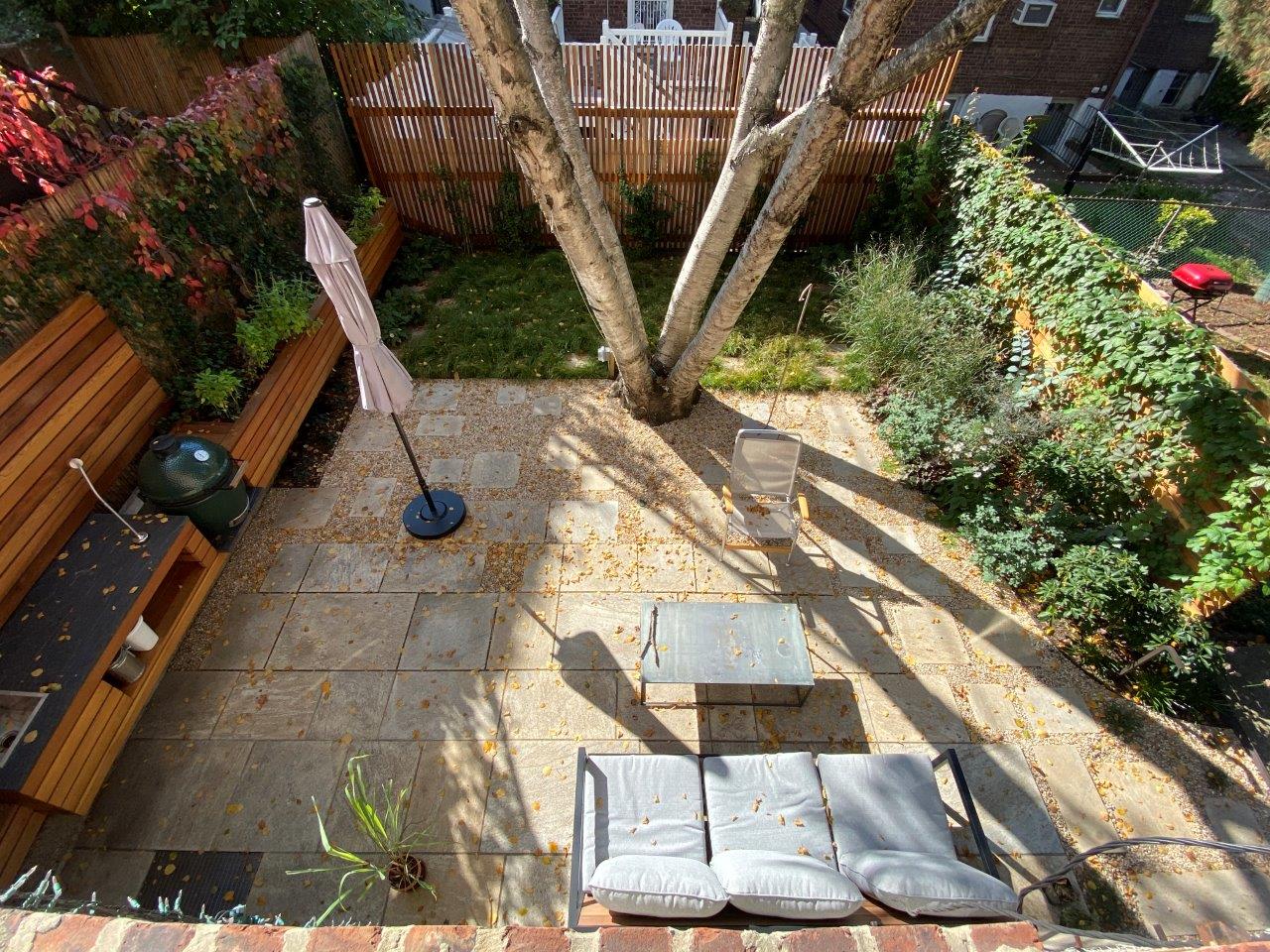
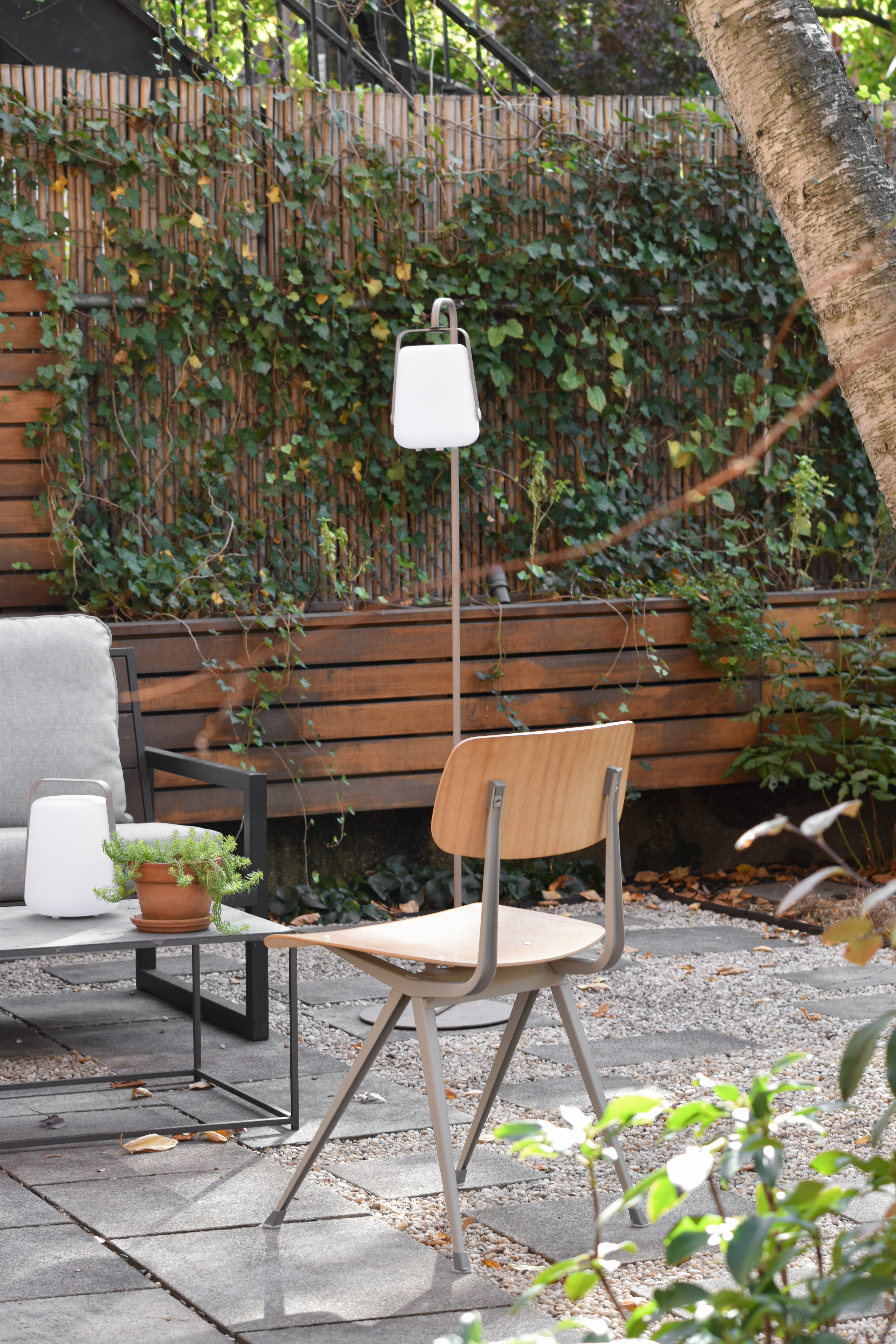
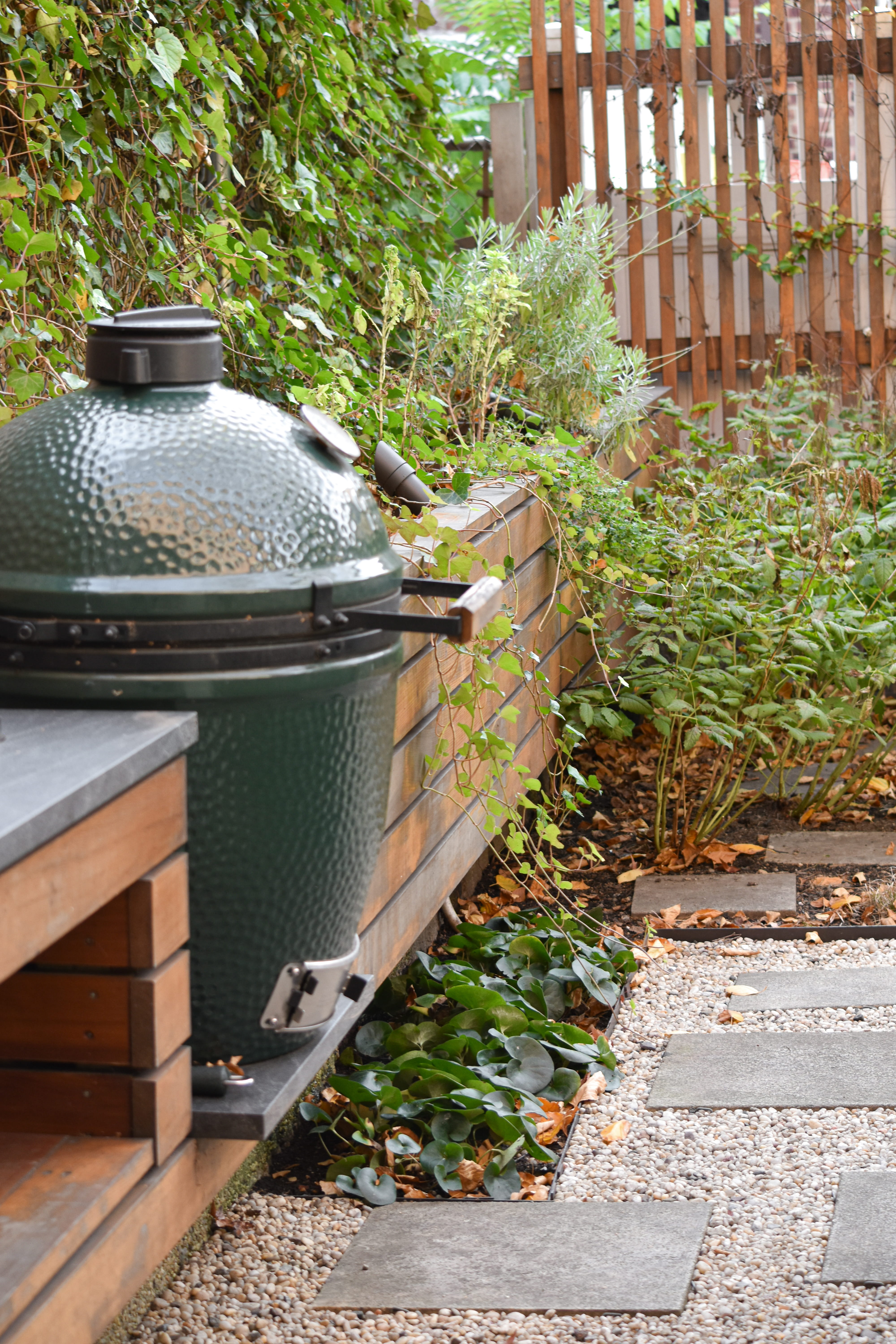
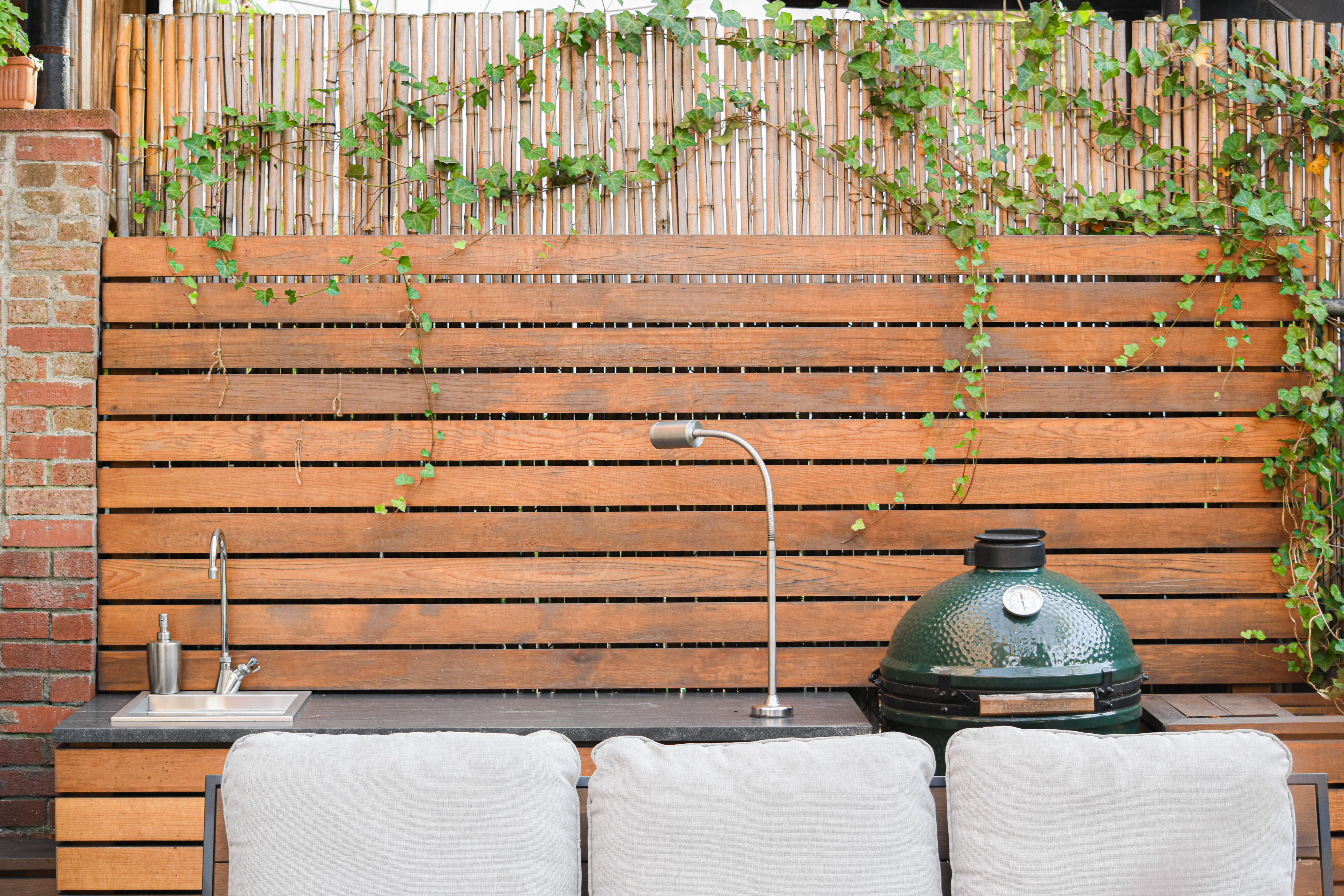
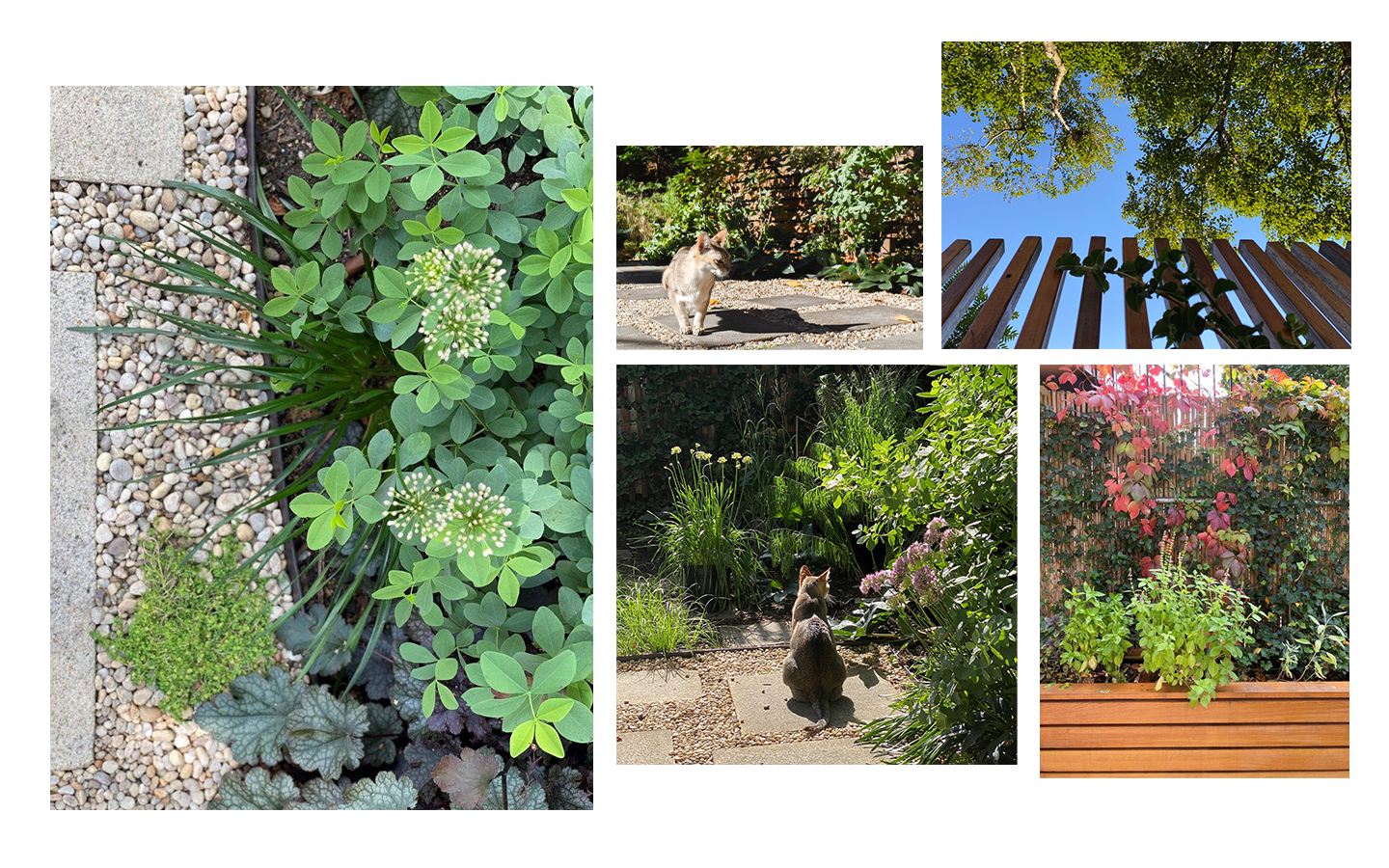
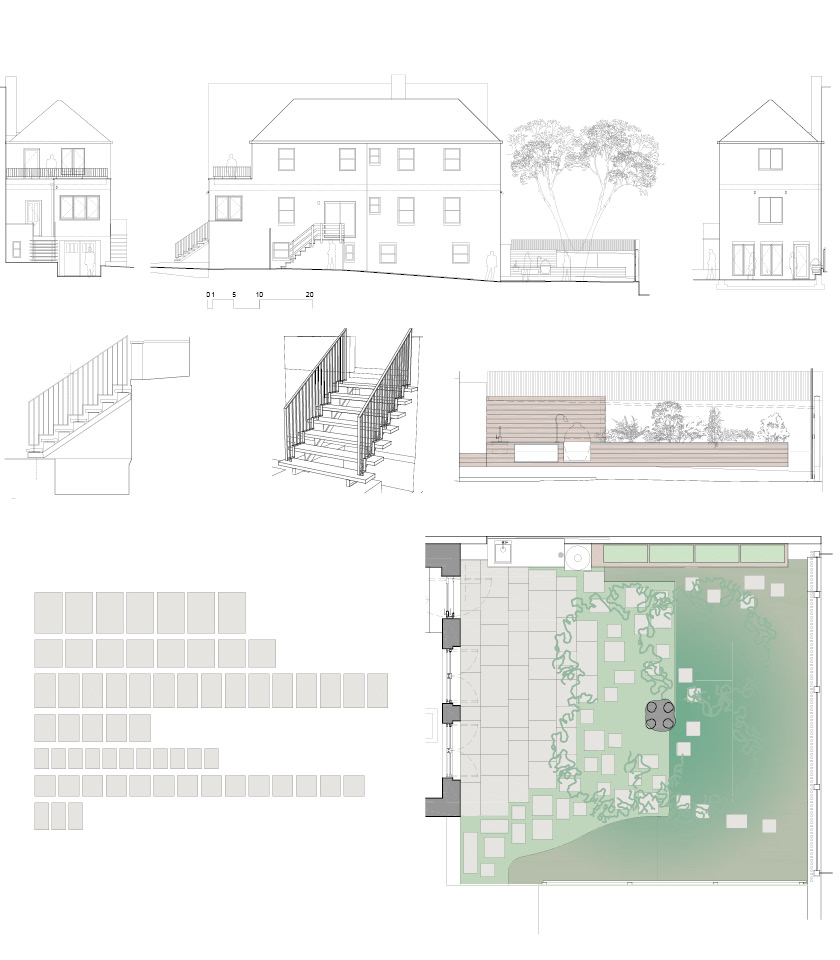
The garden was conceived as an outdoor extension of the living space for dining, lounging, working, and entertaining within an urban setting. The resulting environment offers the family and their guests a peaceful vista of neighboring trees and houses. A mature multi-stemmed Birch tree became the central organizing element anchors the transition between the paced lounge area and the softer surface of the no-mow Carex lawn. The cedar fencing was designed to promote optimal air circulation, helping to deter mosquitoes while allowing cooling breezes to move through the yard. Beneath the surface, a French drain system captures stormwater runoff from the walkway, a retaining water on site and reducing strain on the sewer system.
For the paving, we selected honed Sahara granite for its light coloration and refined texture. Although our preferred pavers had sold out for the season, the supplier offered remaining pieces in varying sizes at a discounted rate. This unexpected constraint posed the challenge of developing a pattern that would use the available material efficiently while still appearing intentional and cohesive. After many iterations, we arrived at a satisfying solution.