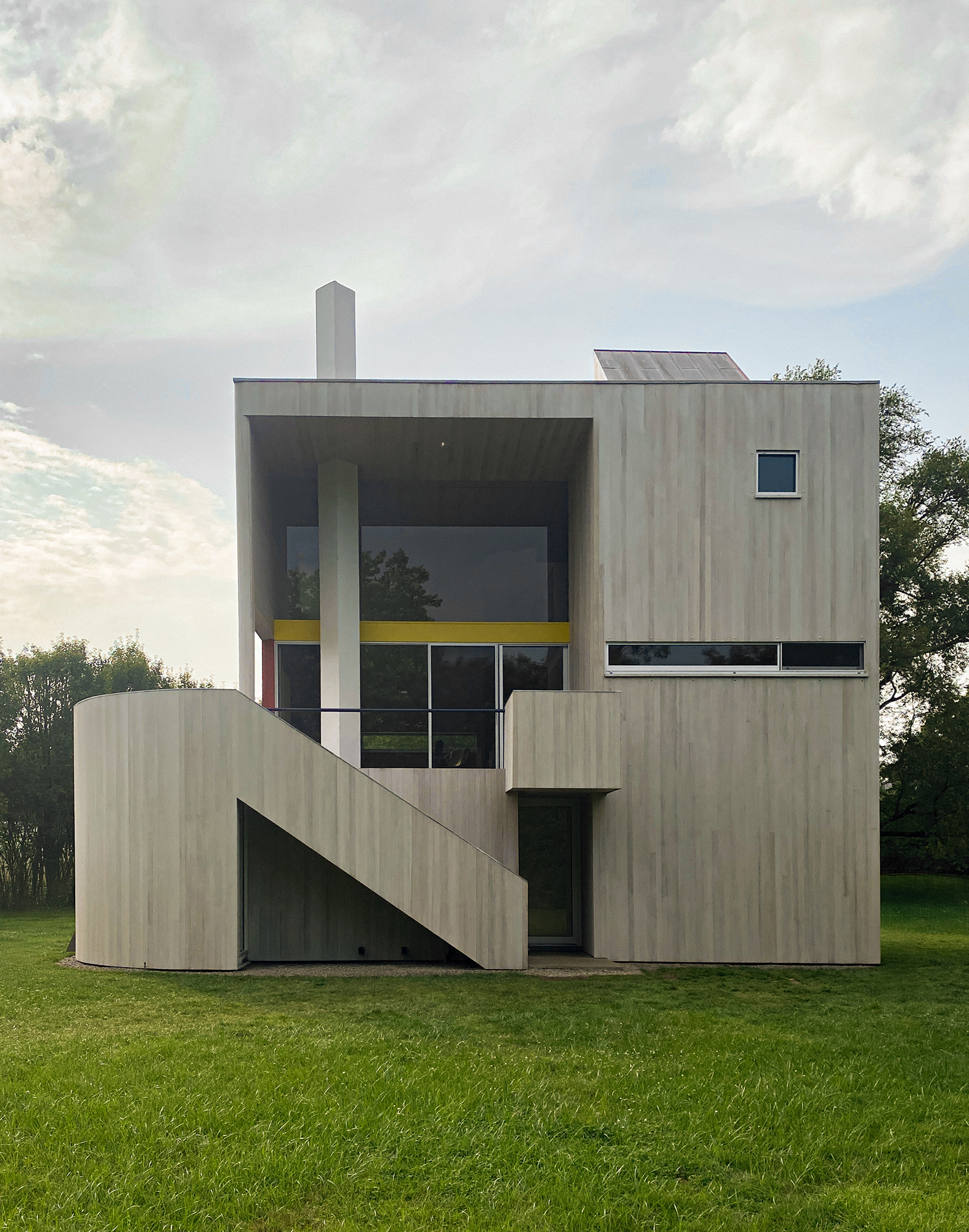
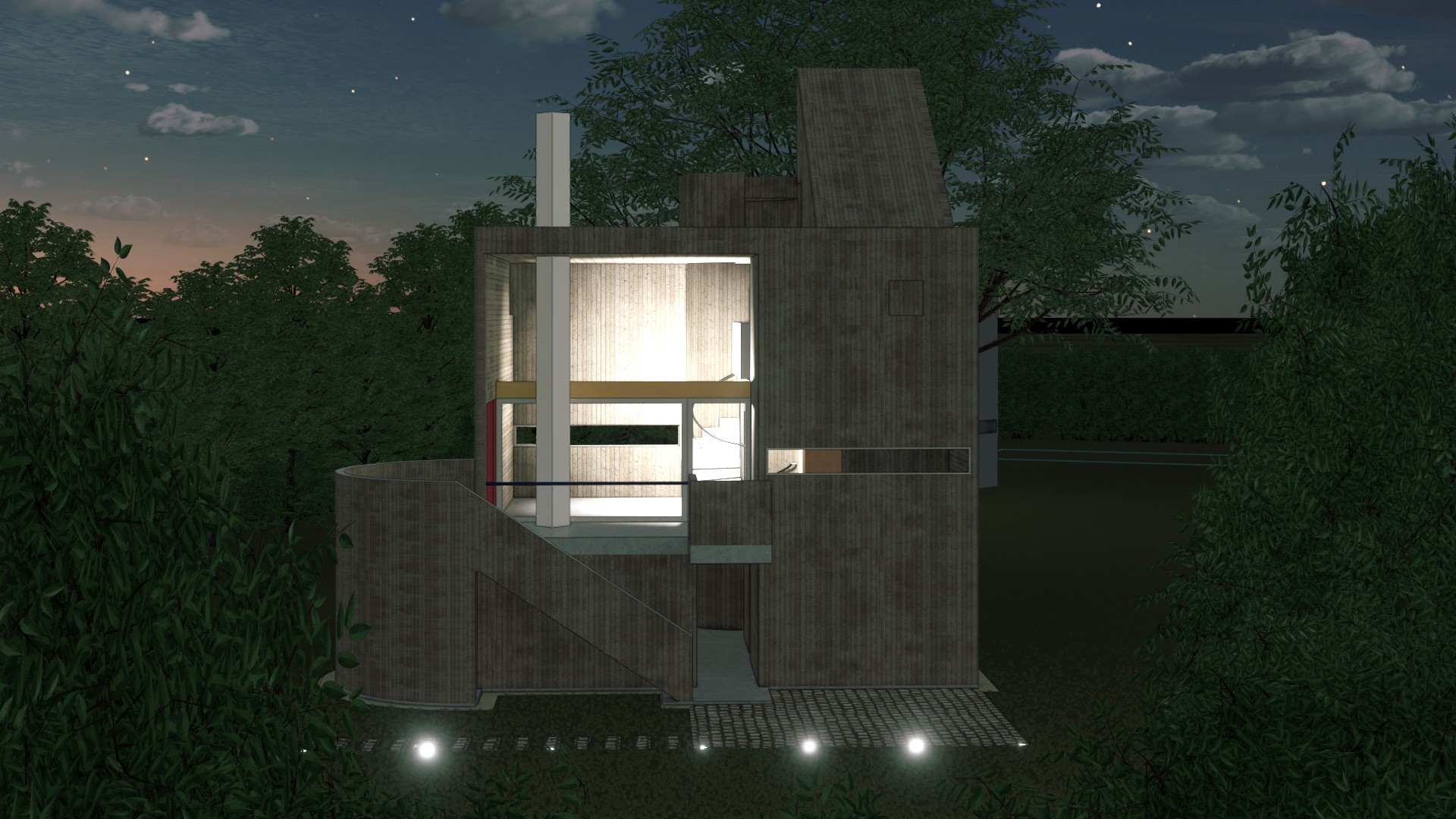
Designed by Charles Gwathmey for his parents in 1965, the Gwathmey Residence in Amagansett, New York, is a landmark of American modernist architecture. While this diminutive yet powerful 1,200-square-foot structure launched Gwathmey's career; it also inspired a generation of designers, cementing its place as a 20th-century architectural icon. Over half a decade later, this seminal work needed a restoration that not only preserves its architectural legacy but also breathes new life into its spaces, adapting them for a new generation while honoring the visionary who created them. Its recent restoration is a tango between preservation and evolution, maintaining the integrity of Gwathmey's original vision while sensitively updating the house for a contemporary living.
At the heart of this restoration is a respect for the almost playground-like quality that characterizes the house. As one moves through the space, there's a sense of the playfulness that Gwathmey imbued in every corner. This spirit has been carefully maintained and even enhanced, ensuring that the house continues to delight its inhabitants.
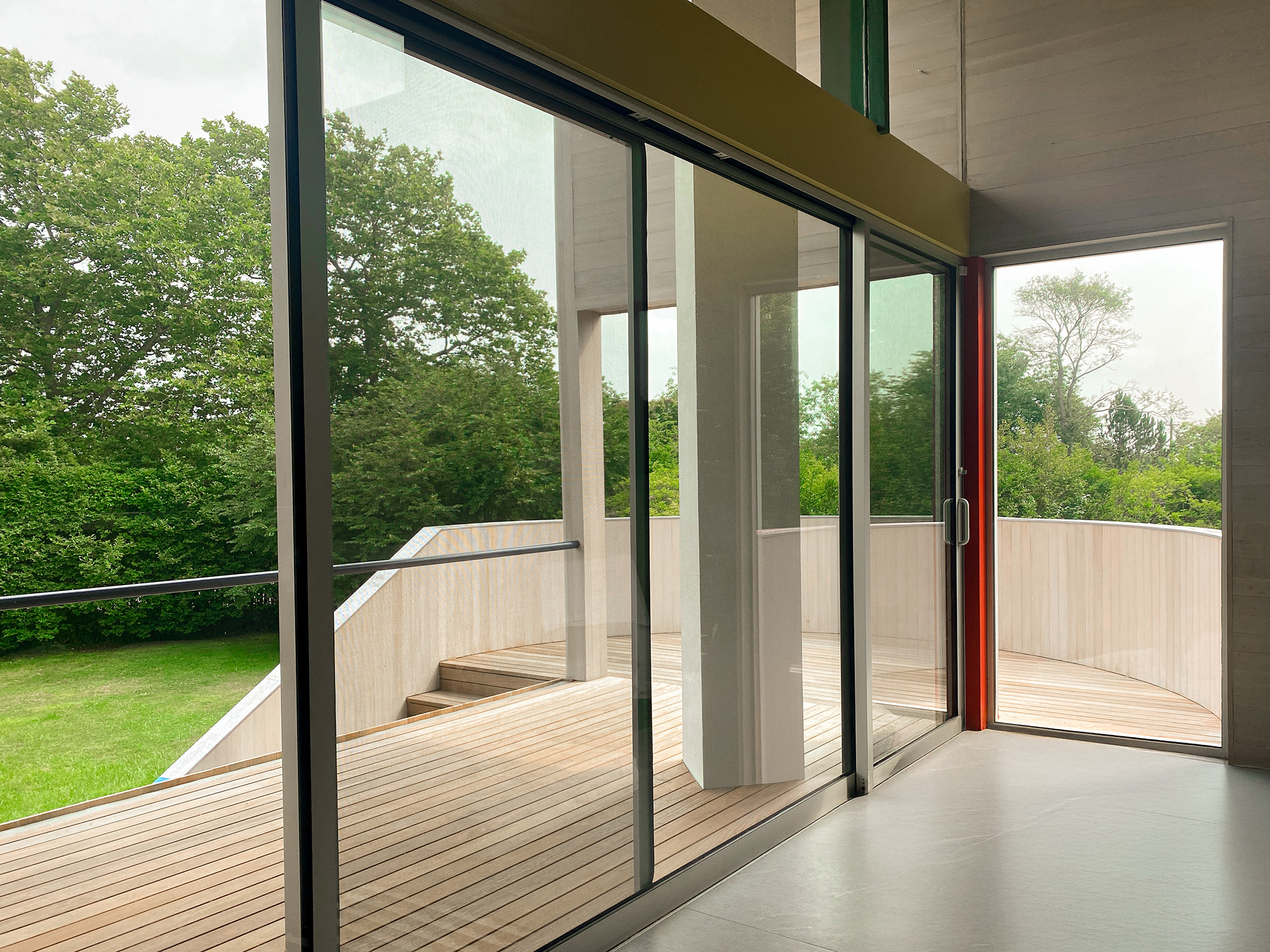
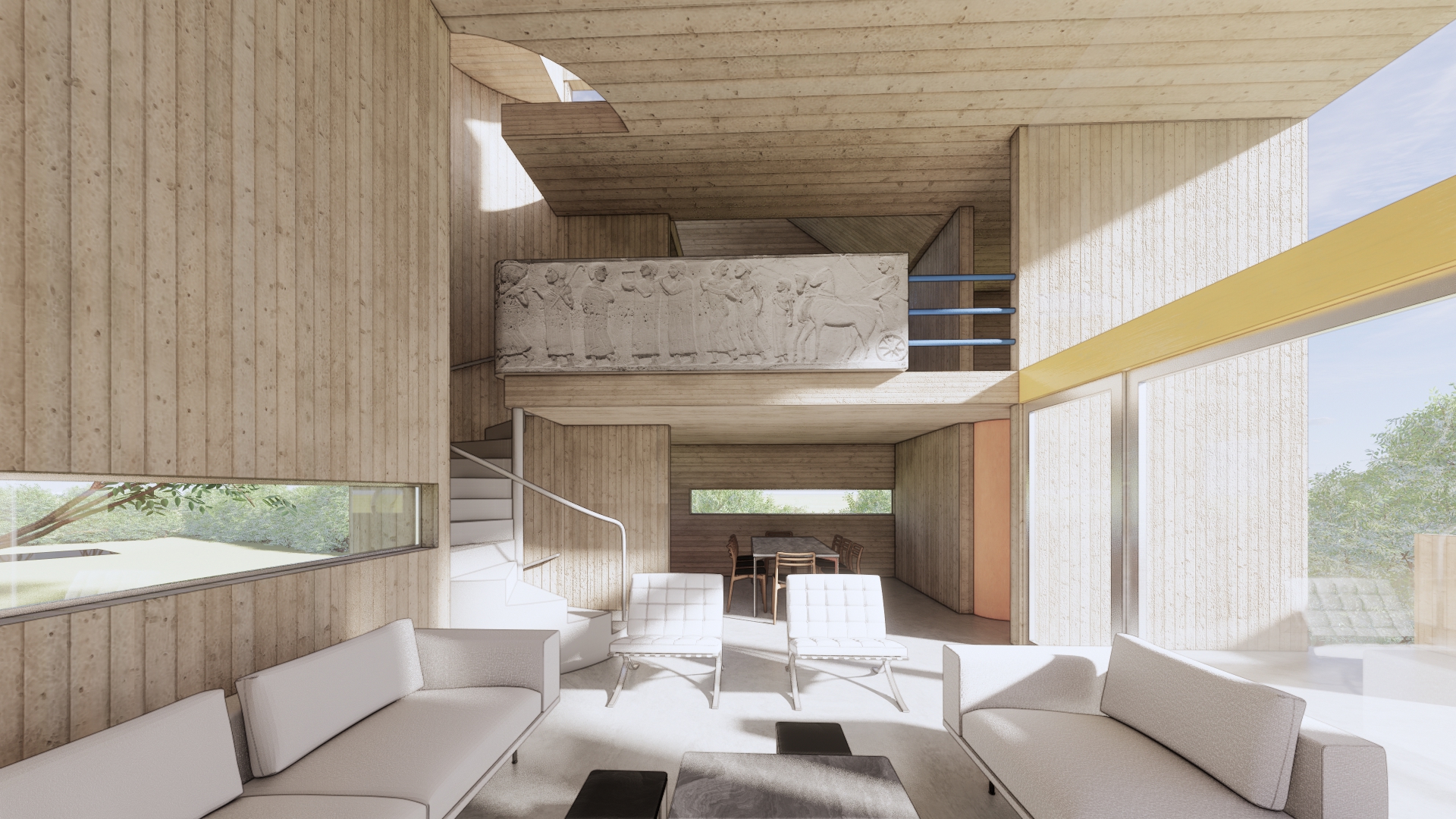
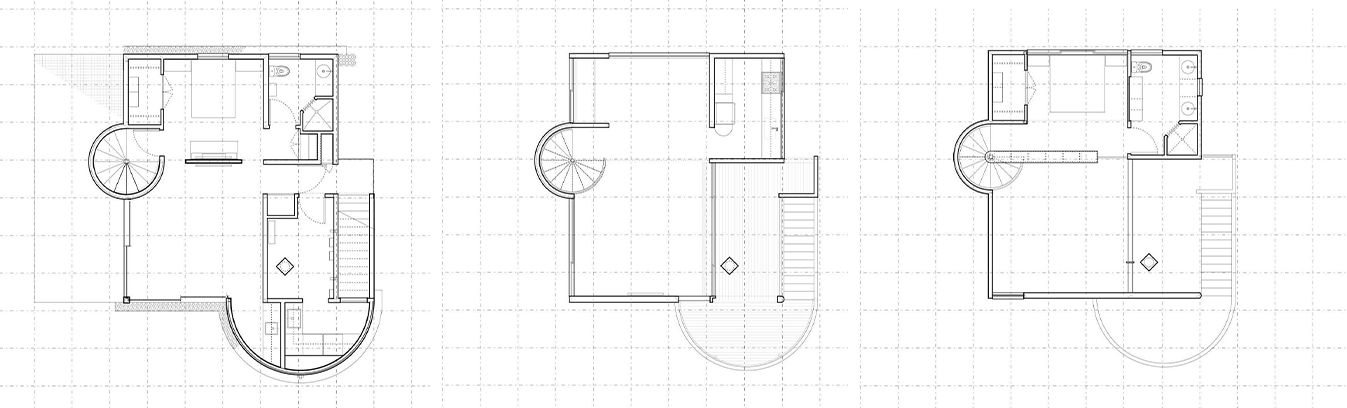
Central to Gwathmey's original design was a rigorous 4'-0" grid system, a dimensional rhythm that gave the house its distinctive character. This modular approach was carefully preserved during renovations. While the original floor was concrete, it was replaced with 4'-0" square tiles that perfectly align with the existing grid. New elements, including wall placements, cabinetry, lighting fixtures, and ground floor glass doors, were all aligned to this grid. Lighting has been updated with discrete, smaller-sized downlights featuring a silver finish and a new wood ring detail, enhancing the space without detracting from the original design. In the bathrooms, larger porcelain tiles with minimal grouting create a sense of calm, while linear drains replace traditional center drains. The direction of new interior wall boards follows the larger compositional idea of the house rather than conforming to individual room geometries, reinforcing the sense of spatial continuity.
The restoration of the Gwathmey Residence involved comprehensive technical upgrades to enhance its resilience and comfort. Structural reinforcements were implemented to strengthen the building and new mechanical systems were installed to improve functionality. The new building envelope was thoroughly insulated and made watertight, insulated windows were fitted throughout. The roof was lifted to increase interior height, and careful attention was paid to maintain the visual proportionality of the house. As a result of these enhancements, the house feels more comfortable and secure during New York’s increasingly volatile stormy weather.
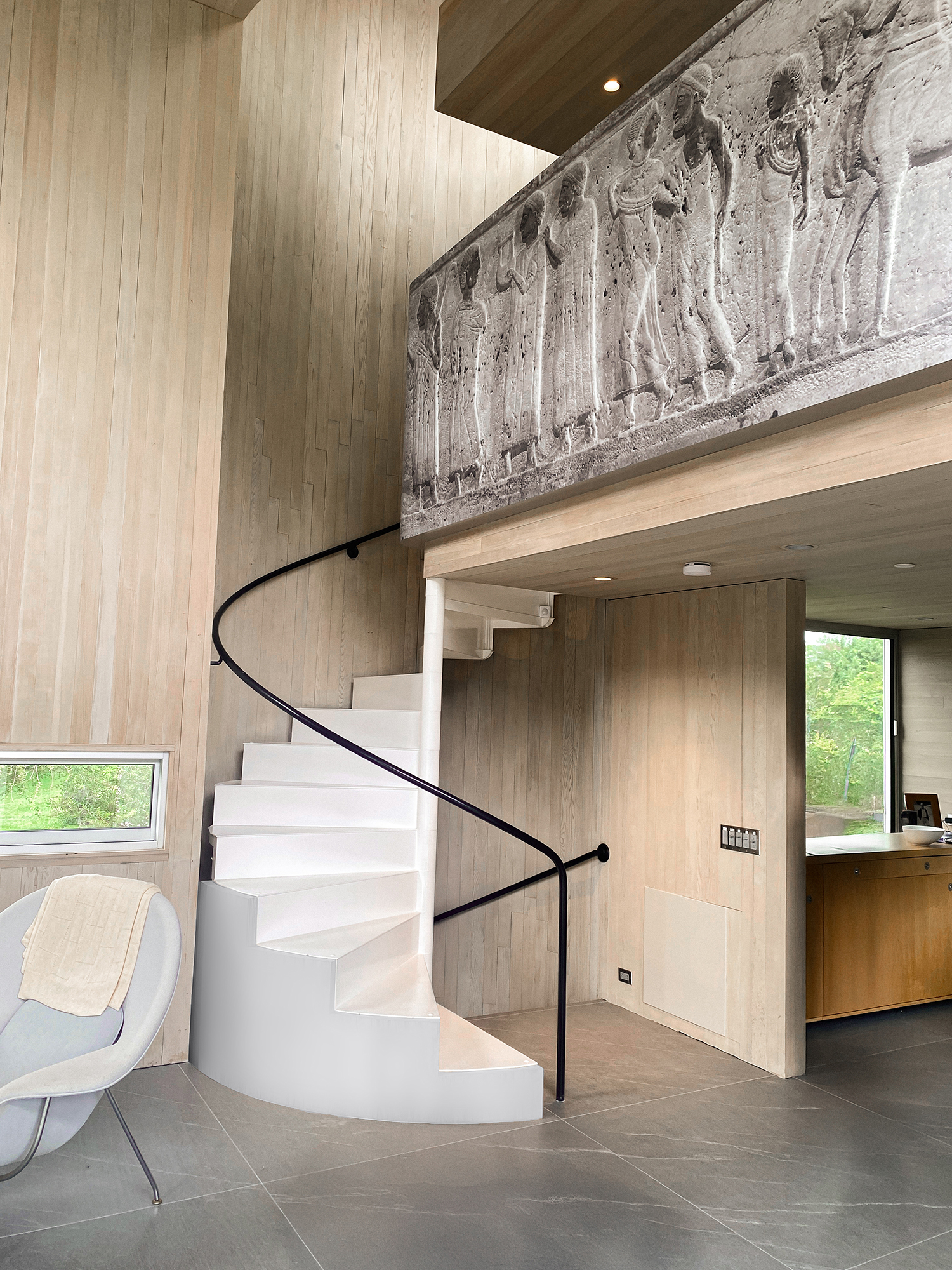
An important element of the restoration is the rebirth of the original photomural. This feature, embedded in the memories of Gwathmey's son, Eric, has been recreated based on rigorous design studies. The mural connects the house's past with its present, adding a layer of personal history to the architectural narrative. Modifications were made to accommodate the Gwathmey dogs, such as the addition of glass panels to the staircase railing. The ground level, originally a service area, has been transformed into a living space for Charles Gwathmey's widow. A new ground floor corner mimics the existing studio’s corner entry, creating a visual continuity that speaks to Gwathmey's original intentions.
The Gwathmey House now stands as a multi-layered narrative, embodying the stories of Charles Gwathmey's parents for whom it was originally designed, the architect himself, and now his wife, their four dogs, his son and partner.